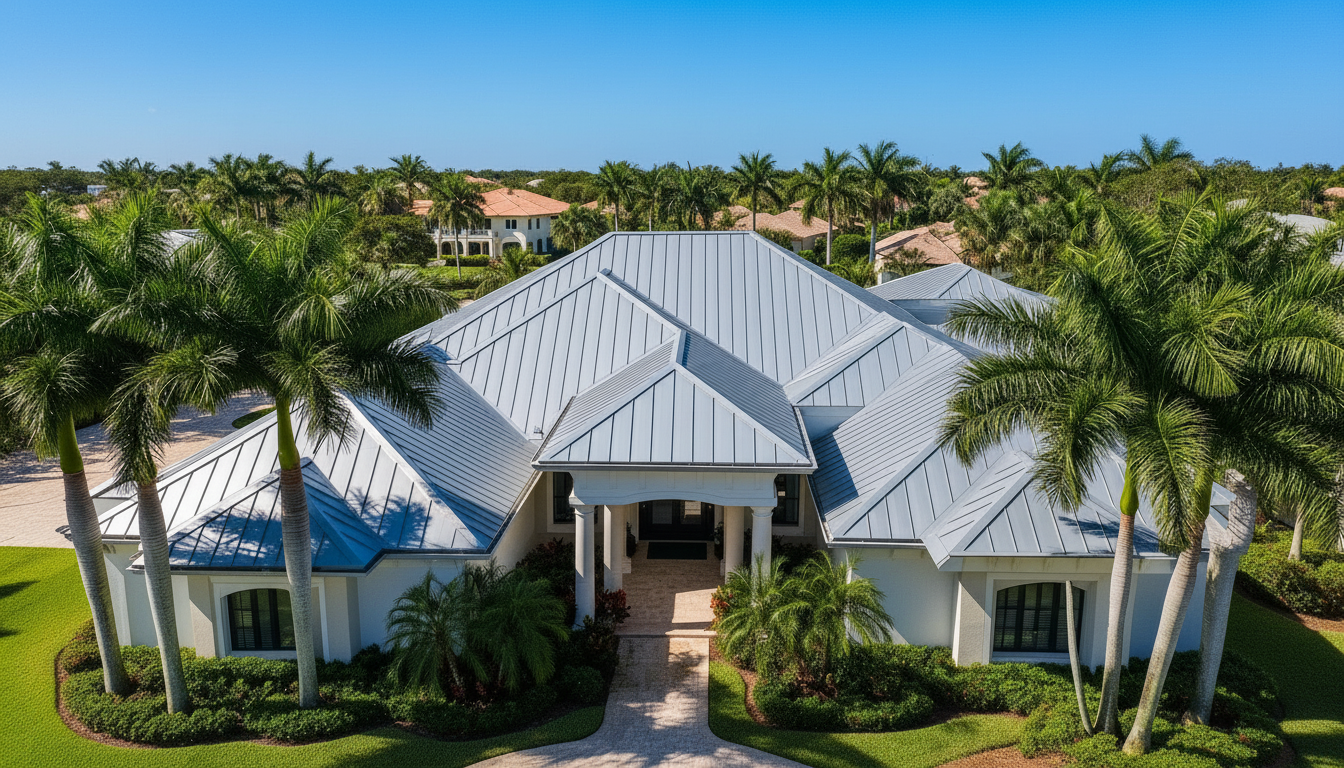
Commercial Roofing in Estero, Florida: A Homeowner's Guide
Commercial Roofing in Estero, Florida: A Homeowner's Guide Commercial roofing can be appropriate for an Estero home when its roof design calls for a low-sl
Overview
Commercial Roofing in Estero, Florida: A Homeowner's Guide Commercial roofing can be appropriate for an Estero home when its roof design calls for a low-slope system, or when an association manages a shared residential roof. For homeowners, the right choice depends on slope, drainage, wind resistance, and ownership responsibilities—not simply whether a contractor calls the work “commercial.” That distinction matters in Estero, where tile-roofed houses, condominium buildings, attached villas, and screened outdoor living areas create different roofing needs. A system suited to a broad condominium roof may not belong on a steeply pitched single-family home. What Commercial Roofing Means for an Estero Homeowner Commercial roofing generally describes systems and construction methods used on business properties and larger buildings. However, some of those same systems serve residential buildings with low-slope roofs. These roofs need continuous waterproofing rather than relying primarily on overlapping shingles or tiles to shed water. On a detached home, commercial-style roofing may appear over an addition, porch, or other low-slope section. Condominium owners may share a much larger roof with rooftop equipment and multiple drainage points. Attached villas
Continued (2)
can have shared rooflines, although ownership and maintenance duties vary by community. Before requesting work, identify who controls the roof. Your deed, condominium documents, or homeowners association documents may assign maintenance differently than you expect. An individual owner should not authorize changes to a shared roof without confirming that authority. How Estero's Weather Changes Roofing Decisions Estero's rainy season brings frequent downpours, while tropical storms and hurricanes can combine wind-driven rain with prolonged exposure. Roof edges, corners, flashing, and attachment details deserve close attention because wind pressure is not uniform across a building. A product's wind rating alone does not establish how the completed roof will perform. Water management is equally important. Leaves and debris can restrict drains, scuppers, gutters, and downspouts. On low-slope roofs, inadequate slope or blocked outlets can leave standing water that stresses seams and vulnerable details. A replacement should address drainage problems rather than hide them beneath new material. Strong sunlight heats exposed roofing and contributes to expansion, contraction, and material aging. Humidity and repeated wetting can also make moisture problems harder to diagnose. A ceiling
Continued (3)
stain may come from roof leakage, condensation, or an air-conditioning issue, so inspection should trace the source before recommending repairs. Many Estero neighborhoods feature concrete or clay tile roofs. Tile is a roof covering, not the entire waterproofing assembly; underlayment and flashing remain critical. Where a tile roof meets a low-slope addition, that transition needs particular care. Roofing Systems Worth Understanding Single-ply membranes TPO and PVC are single-ply membrane options for suitable low-slope roofs. Their performance depends on the complete assembly, including insulation, attachment, seams, perimeter details, and penetrations. Light-colored membranes can reduce solar heat absorption, but actual energy savings depend on insulation, building design, and air-conditioning use. Modified bitumen Modified bitumen uses reinforced asphalt-based sheets and can suit some residential low-slope sections. Installation methods vary. Ask how the proposed assembly handles drainage, transitions, and the existing deck, rather than choosing solely by the material name. Coatings and restoration systems A coating may extend the useful service of a compatible roof that is sound enough to restore. It is not a substitute for replacing deteriorated decking, removing wet insulation, or
Continued (4)
correcting failed flashing. The contractor should explain the roof's condition and why restoration is appropriate before proposing it. Tile, shingles, and metal For sloped portions of Estero homes, tile, asphalt shingles, or metal may be more appropriate than a membrane. Minimum slope requirements and approved installation details matter. A property with several roof slopes may need more than one system, with carefully designed connections between them. Step by Step: Planning Your Roofing Project Step 1: Confirm responsibility and approvals Determine whether you, your association, or a condominium board is responsible for the roof. Check community requirements for visible materials and colors. Association approval and building permits are separate issues; one does not replace the other. Step 2: Gather useful information Collect available roof permits, previous repair records, inspection reports, and photographs of interior staining. Note when leaks occur: during heavy downpours, wind from one direction, or extended rain. These details help narrow the investigation. Do not climb onto a wet, damaged, or unfamiliar roof to gather evidence. Step 3: Request an inspection of the full assembly An inspection should consider
Continued (5)
the roof covering, accessible deck conditions, flashing, penetrations, edges, and drainage. Where concealed moisture is suspected, additional testing or limited investigative openings may be needed. Ask what was actually inspected and what remains unknown. Step 4: Compare repair, restoration, and replacement A localized defect on an otherwise serviceable roof may justify repair. Widespread deterioration, recurring failures, or moisture within the assembly may support replacement. Ask each contractor to explain the evidence behind the recommendation and what a smaller repair would leave unresolved. Step 5: Review a detailed written scope The proposal should identify materials, removal work, attachment methods, flashing, drainage changes, debris handling, and protection for surrounding areas. It should also explain how concealed damage will be documented and priced. Compare equivalent scopes rather than assuming the lowest total covers the same work. Step 6: Verify permitting and closeout Confirm the permitting authority for your specific Estero address and ask how required inspections will be handled. Applicable Florida Building Code requirements and product approvals should guide the installation. At completion, keep permit records, inspection results, material information, and project photographs
Continued (6)
with your property documents. What Affects Commercial-Style Roofing Costs? A useful estimate requires more than square footage. Roof access, height, slope, material choice, attachment requirements, and the number of penetrations all affect labor and materials. A small low-slope addition can still involve complicated flashing where it connects to the main house. Removal and disposal costs depend on the existing assembly and how many layers must come off. Damaged decking or wet insulation adds work that may not be fully measurable beforehand. Ask for a clear process for approving additional work, including photographs and agreed pricing methods. Drainage improvements, tapered insulation, and changes around rooftop equipment can also affect the budget. In shared communities, access restrictions and coordination with residents may complicate staging. Request an itemized scope with exclusions identified; a broad price range without an inspection can create false expectations. Frequently Asked Questions Does my Estero house need commercial roofing? Not necessarily. Low-slope roof sections may need systems commonly used on commercial buildings, while steep-slope sections may use tile, shingles, or metal. Roof geometry and the existing assembly should guide
Continued (7)
the decision. Can a roof coating fix a leaking roof? Sometimes coating is part of a suitable restoration, but leaks and underlying defects need diagnosis first. Coating over wet materials, deteriorated decking, or failed details can leave the actual problem unresolved. Who pays for roofing on an attached villa or condominium? Responsibility depends on the governing documents and ownership structure. Do not assume that sharing a roof means the association pays for every repair. Confirm responsibility before authorizing work. Should I inspect my roof after a tropical storm? Check from the ground for displaced materials, debris, and damaged gutters, and look indoors for new stains. Arrange a professional inspection if you notice changes or suspect damage. Avoid walking on the roof yourself. Make the Decision Around Your Building For an Estero homeowner, a sound roofing plan starts with the actual roof—not a commercial or residential label. Confirm responsibility, identify the source of problems, and compare written scopes that address drainage, weather exposure, and connections between materials. Request a Roof Inspection from O'Brien Contracting.
O'Brien Contracting — Florida roofing contractor, license CCC1335947. Call (239) 919-4485.
Related pages