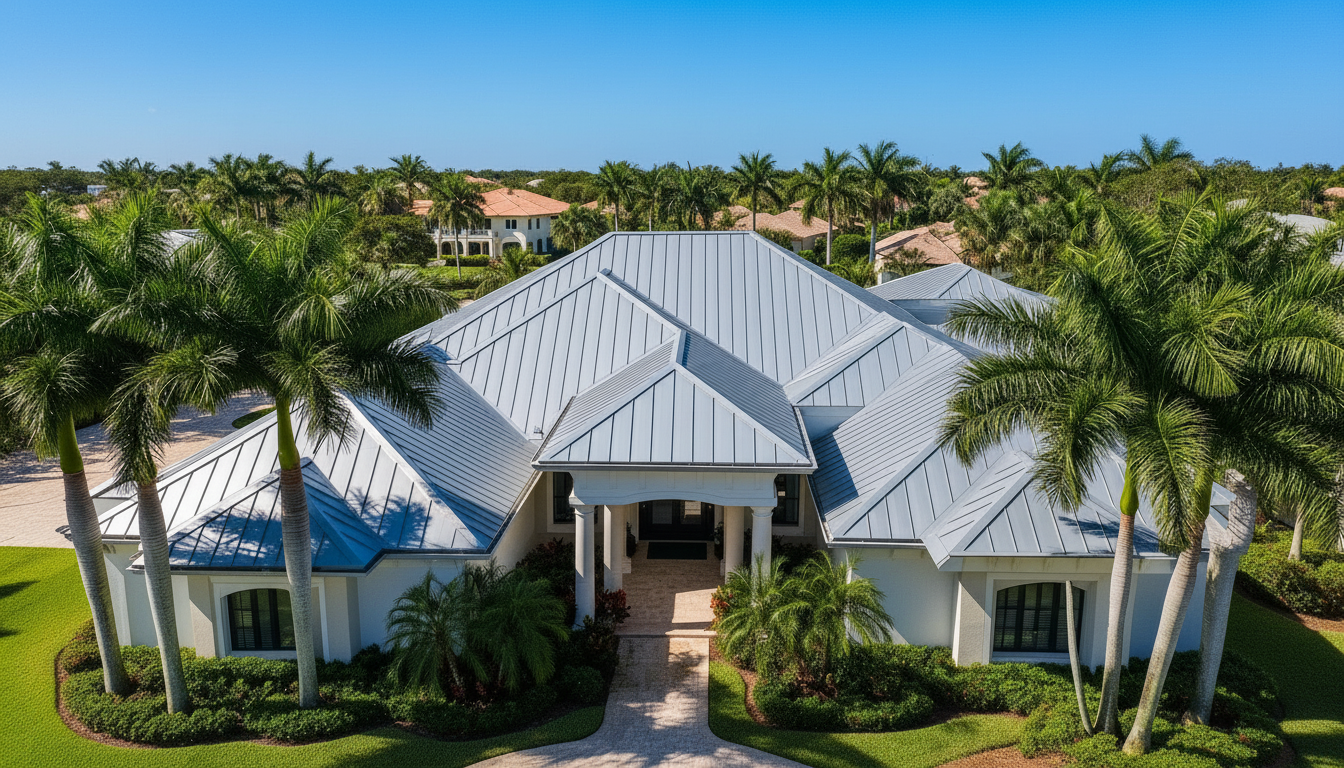
How Salt Air Affects Coastal Roofs
How Salt Air Affects Coastal Roofs Salt air affects coastal roofs by depositing chlorides that accelerate corrosion on metal panels, fasteners, flashing, a
Overview
How Salt Air Affects Coastal Roofs Salt air affects coastal roofs by depositing chlorides that accelerate corrosion on metal panels, fasteners, flashing, and other exposed components. On Florida homes, those deposits combine with humidity, heat, and storm-driven rain to weaken protective finishes and connections, sometimes allowing leaks before the main roofing material looks worn out. Why Florida’s Coastal Conditions Make Salt More Damaging Breaking waves release tiny saltwater droplets that wind carries inland. After the water evaporates, salt remains on roof surfaces and hardware. Exposure is usually greater near open water, but distance from the beach is not the only factor. Prevailing winds, nearby buildings, roof height, and sheltered areas all influence where deposits collect. Some salts in marine deposits absorb moisture from humid air, helping maintain an electrically conductive film that supports corrosion. Florida’s humid nights and frequent dew can repeatedly wet deposits, even between rainstorms. Shaded seams and protected undersides may stay damp longer than exposed surfaces. Heavy rain can wash salt off open roof areas, but it does not reliably clean beneath panel overlaps, inside connections, or
Continued (2)
behind equipment. Tropical storms can deliver another load of salt spray while forcing water toward joints. Summer heat also expands roofing materials, while nighttime cooling contracts them, adding movement at already vulnerable connections. Where Salt Damage Usually Starts A coastal roof can look sound from the driveway while small metal components deteriorate. Roof-to-wall flashing, valleys, vent boots, drip edges, exposed screws, and mounting brackets deserve close attention. These parts manage water or secure assemblies, so their condition matters even when damage appears minor. Early warning signs include rust streaks, white powdery deposits on certain metals, blistering finishes, and corrosion around screw heads. White deposits are not automatically proof of corrosion; salt residue and other surface deposits can look similar. An inspection should identify the material and determine whether there is actual metal loss. Corrosion can also develop between incompatible metals when salty moisture connects them. This is called galvanic corrosion. The combination of metals, their relative exposed areas, and the surrounding moisture affect how quickly it progresses. A replacement screw or bracket should be compatible with the existing roofing system,
Continued (3)
not simply fit the hole. How Different Roofing Materials Respond Metal roofing Metal roofing can perform well near the coast when the panel material, coating, fasteners, and details suit the exposure. However, “metal roof” covers several different systems. Coated steel, aluminum, and other metals do not respond identically to salt. Scratches, cut edges, trapped debris, and deteriorating coatings can create vulnerable spots. Aluminum does not develop red rust like steel, but it can experience pitting and galvanic corrosion. Concealed fasteners reduce direct exposure, yet seams, clips, flashing, and penetrations still need attention. Product-specific coastal installation and maintenance guidance matters more than broad claims that a metal is corrosion-proof. Asphalt shingles Salt does not corrode asphalt shingles the way it corrodes steel. Heat, sunlight, aging, and storm damage are generally more direct concerns for the shingles themselves. However, a shingle roof still depends on metal flashing, nails, vents, and edge details that can suffer coastal corrosion. That distinction matters when planning repairs. Replacing a few discolored shingles will not solve a leak caused by deteriorated flashing. The inspection needs to follow
Continued (4)
the water path and examine the supporting components. Tile roofing Concrete and clay tiles do not rust, but their attachments and flashing may corrode. Depending on the assembly, metal clips, screws, and other connectors can be important to wind resistance. The visible tiles may remain serviceable while concealed components need work. Salt crystallization can contribute to surface deterioration in some porous materials under repeated wetting and drying. However, cracking, surface wear, or staining should not automatically be blamed on salt. Installation issues, foot traffic, aging, and storm impacts can produce overlapping symptoms. Step-by-Step: Managing Salt Exposure on Your Roof Step 1: Document your roof’s exposure Note whether your home faces open water, receives direct spray, or has roof areas sheltered from rain. Identify the roofing material and gather any available product and installation records. This helps a roofing professional compare actual conditions with the manufacturer’s coastal-use requirements. Step 2: Check safely from the ground Look for rust streaks, loose edge metal, displaced roofing, damaged gutters, and debris buildup. Indoors, check accessible ceilings and attic areas for new staining or dampness.
Continued (5)
Do not climb onto a wet, steep, or damaged roof. Walking on tile can also cause damage that is difficult to see immediately. Step 3: Have vulnerable details inspected Ask the roofer to examine flashing, fasteners, penetrations, panel edges, and transitions rather than checking only the broad roof surface. Where accessible, concealed connections also deserve attention. Inspection frequency should reflect exposure, roof condition, and product guidance, with additional checks after significant storms or new warning signs. Step 4: Clean only with an approved method Some coastal roofing systems benefit from periodic freshwater rinsing, particularly where rain does not reach. Follow the manufacturer’s instructions and use a qualified professional when roof access is required. Avoid pressure washing, abrasive tools, and unapproved chemicals. Improper cleaning can damage finishes, dislodge granules, or push water beneath roofing. Step 5: Repair the cause and keep records Address failed coatings, incompatible hardware, trapped moisture, and deteriorated flashing before damage spreads. Smearing sealant over corrosion is not a substitute for evaluating metal loss or connection strength. Keep inspection photos and repair records so changes can be compared
Continued (6)
over time rather than judged from memory. What Affects the Cost of Salt-Related Roof Repairs? The biggest cost distinction is whether corrosion is superficial or has compromised a component. An isolated, accessible flashing repair involves different work than replacing damaged panels or opening a tile roof to reach concealed attachments. Surface treatment is appropriate only when the underlying material remains suitable for service. Access also matters. Steep slopes, multiple stories, complex roof shapes, and equipment near damaged areas increase labor and safety requirements. Matching existing panels or tiles can add difficulty, especially if compatible parts are no longer readily available. Material selection affects both the initial repair and future maintenance. Coastal-suitable coatings, compatible fasteners, and properly detailed flashing may cost more than basic alternatives. Hidden deck damage or deteriorated underlayment can expand the scope once roofing is opened. Ask for an itemized proposal that explains known damage, proposed materials, and how concealed conditions will be handled. Frequently Asked Questions How far inland can salt air affect a roof? There is no single reliable cutoff. Wind direction, storm conditions, shoreline exposure,
Continued (7)
and local terrain affect salt transport. Evaluate the home’s actual exposure and the roofing product’s coastal restrictions rather than relying only on mileage from the beach. Does Florida rain remove enough salt to prevent corrosion? Rain can rinse exposed surfaces, but sheltered areas may retain deposits. Humidity and dew can keep those deposits active between storms. Rainfall does not replace inspections or any cleaning recommended for your specific roof. Is a metal roof a poor choice near the ocean? Not necessarily. Suitability depends on the metal, protective finish, hardware, detailing, and exposure. Compare specific systems intended for coastal conditions, and account for maintenance rather than assuming all metal roofs perform the same way. Does visible rust mean the whole roof needs replacement? No. Localized corrosion may allow a targeted repair, while widespread metal loss or weakened attachments may require more extensive work. The decision should follow an assessment of depth, location, and overall roof condition. Concerned about salt damage on your Florida roof? Request a Roof Inspection from O'Brien Contracting.
O'Brien Contracting — Florida roofing contractor, license CCC1335947. Call (239) 919-4485.
Related pages