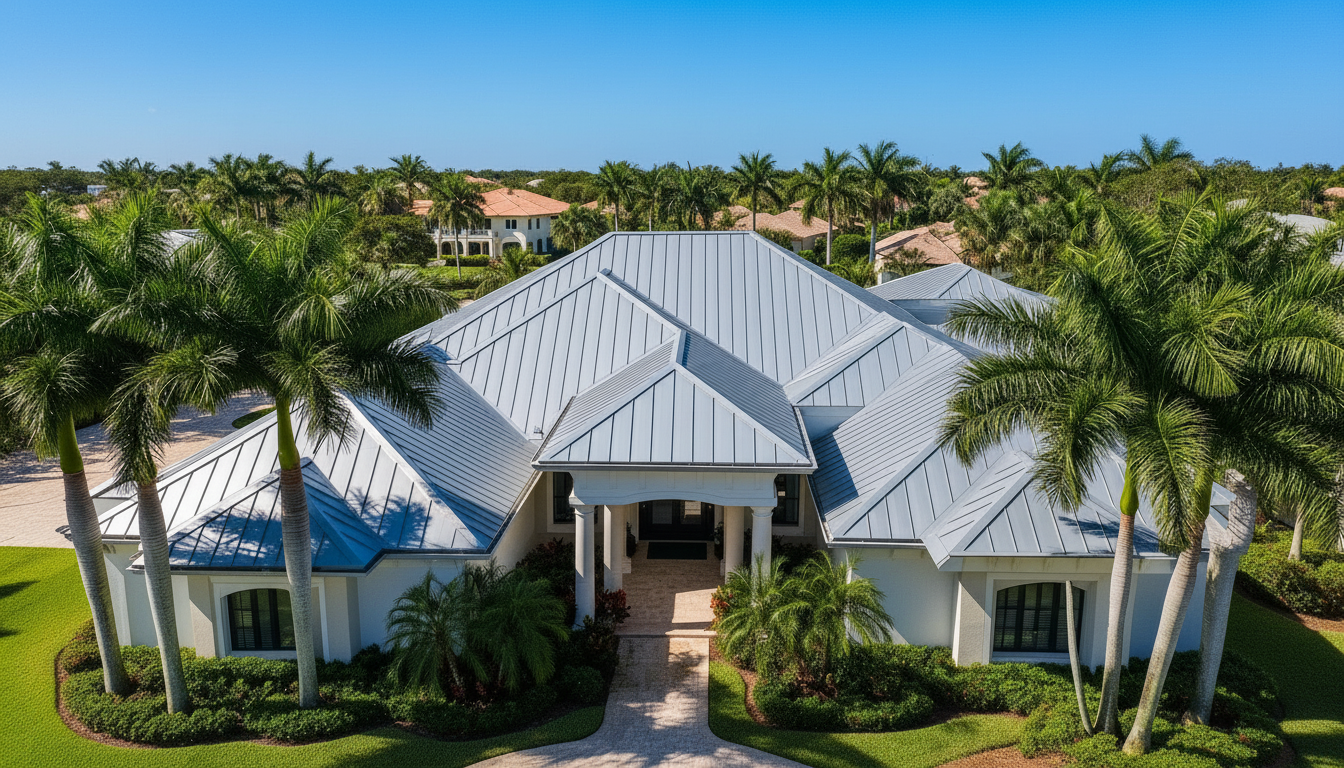
Metal vs Shingle Roofs in Florida Heat
Metal vs Shingle Roofs in Florida Heat A light-colored metal roof with a reflective finish generally handles Florida’s heat better than a dark asphalt shin
Overview
Metal vs Shingle Roofs in Florida Heat A light-colored metal roof with a reflective finish generally handles Florida’s heat better than a dark asphalt shingle roof, but color, insulation, and installation matter more than the material name alone. Shingles remain a practical choice when upfront cost is the priority, while metal may justify its higher initial cost through heat performance and a longer potential service life. The right comparison is between complete roofing systems for your house—not a sample of metal beside a sample of shingles. A shaded Orlando home, a coastal Sarasota property, and a South Florida house with aging attic ducts can have very different priorities. What Florida Heat Actually Does to Your Roof Florida roofs absorb strong sunlight for much of the year. That energy heats the roof covering and decking, then moves toward the attic and living space. Air conditioning must work harder when that heat reaches the home, especially where ceiling insulation is thin or attic ductwork leaks. Roof color and solar reflectance influence how much sunlight becomes heat. Thermal emittance describes how readily a
Continued (2)
surface releases absorbed heat. Look for published ratings for the specific product and finish rather than assuming all metal is cool or all shingles run hot. A white or light-colored coated metal panel can reflect substantially more sunlight than a conventional dark shingle. However, bare shiny metal is not automatically the best cooling choice, and reflective shingles can narrow the gap. Roof temperature alone also does not tell you how much your electricity bill will change. Metal Roofs: Heat Benefits and Florida Trade-Offs Metal roofing is available in standing-seam panels, exposed-fastener panels, and profiles that resemble other materials. Those systems differ in attachment, water management, maintenance, and price. Treating them as one interchangeable product can lead to an incomplete comparison. A reflective factory finish is a major advantage in Florida sunshine. Metal also expands and contracts as temperatures change, so panels, clips, fasteners, and flashing must accommodate movement. Poor detailing can turn daily heating and cooling into loose connections or leaks. Coastal exposure deserves special attention. Salt-laden air can accelerate corrosion, particularly at cut edges, incompatible metal connections, and damaged
Continued (3)
finishes. Ask whether the proposed panel material, coating, and fasteners are appropriate for your distance from saltwater. Metal can provide a long service life, but it is not maintenance-free. Exposed fasteners and sealing washers need monitoring. Standing-seam systems reduce exposed penetrations across the panel field, yet flashings, valleys, and roof penetrations still require inspection. Tree limbs and windblown debris can dent or damage panels. Shingle Roofs: Practical, but Product Selection Matters Asphalt shingles usually have a lower installed cost than metal. They are familiar to many roofing crews, and localized repairs may be simpler when matching materials are available. For homeowners working within a firm budget, those are meaningful advantages. Heat and ultraviolet exposure gradually age asphalt. Over time, shingles may lose granules, become brittle, or develop cracks. The pace depends on product quality, roof exposure, ventilation where applicable, installation, and storm damage. Avoid choosing solely by the lowest proposal total. Lighter shingles generally absorb less heat than darker options, although appearance alone does not establish reflectance. If cooling performance matters, compare tested product ratings. A reflective shingle may offer
Continued (4)
a useful middle ground without the upfront expense of a metal system. Florida humidity also encourages algae staining on some roofs. Algae-resistant shingles can help limit discoloration, but they do not eliminate all roof growth or maintenance. Dark streaks are not, by themselves, proof that a roof needs replacement. Storms and Humidity Can Outweigh the Heat Comparison Neither metal nor shingles are automatically hurricane-proof. Wind resistance depends on the tested assembly, attachment pattern, roof shape, decking condition, and edge details. Applicable Florida Building Code requirements and local wind-design conditions must guide product selection and installation. Shingles can lift or blow off when attachment or sealing is inadequate. Metal panels can also fail if connections or perimeter details are wrong. Wind-driven rain can exploit weak flashing on either roof, particularly around walls, valleys, skylights, and plumbing vents. Humidity adds another concern: moisture inside the roof assembly. Bathroom exhaust discharged into an attic, air leaks from the house, and poorly planned ventilation can contribute to condensation or damp decking. Metal does not inherently make an attic dry, and shingles do not inherently
Continued (5)
make it damp. The attic’s design matters. A vented attic needs a suitable intake-and-exhaust strategy; an unvented, conditioned attic needs a different approach. Adding vents indiscriminately can undermine the assembly. Address moisture sources before expecting a new covering to solve them. Step by Step: Choose for Your Florida Home Step 1: Inspect the existing roof and attic Start with the decking, flashing, penetrations, insulation, and signs of leaks or condensation. Identify attic duct leaks and blocked ventilation where relevant. These conditions affect both the replacement scope and whether a cooler roof will noticeably improve comfort. Step 2: Define your main priority Decide whether you most need lower upfront spending, reduced solar heat gain, coastal durability, or a longer ownership horizon. Also check neighborhood appearance rules before narrowing the materials and colors. A prohibited finish is not a useful finalist. Step 3: Compare specific products Request the exact shingle or metal system, color, finish, and available reflectance ratings. For metal, identify the panel material and attachment style. For both options, confirm suitability for the property’s wind exposure and applicable local requirements.
Continued (6)
Step 4: Get equivalent written scopes Compare proposals covering the same tear-off, underlayment, flashing replacement, deck repairs, ventilation work, disposal, and permit responsibilities. Ask how concealed decking damage will be priced. A lower total may simply exclude work included elsewhere. Step 5: Weigh ownership costs without guessing savings Consider how long you expect to stay, likely maintenance, repair access, and replacement timing. Ask your insurer directly about material eligibility and documentation requirements. Do not assume either roof will produce a premium reduction or a specific electricity savings. What Drives the Cost Difference? Metal generally costs more because of the roofing material, fabrication, trim, and installation labor. Standing-seam work often requires more specialized detailing than a straightforward shingle installation. Complex valleys, dormers, steep slopes, and difficult access increase labor for either system. The roof’s condition can change the budget substantially. Rotten decking, damaged fascia, old roof layers, and flashing corrections are not cosmetic extras. They affect the foundation of the new system and should be addressed in the scope. Coastal-compatible materials and finishes may add expense. So can correcting attic moisture
Continued (7)
or insulation deficiencies. Keep these improvements separate in the proposal so you can understand what each one accomplishes. Energy savings alone may not repay metal’s added cost during your ownership. A well-insulated home may see a smaller cooling benefit than a poorly insulated one. Compare the total investment against comfort, durability, maintenance, and your plans—not an unsupported payback promise. Frequently Asked Questions Will a metal roof make my Florida home cooler? A reflective metal roof can reduce solar heat gain. Indoor comfort still depends on insulation, air sealing, duct condition, and air-conditioning performance. A darker metal finish may offer less benefit than expected. Are shingles a bad choice for Florida heat? No. Properly selected and installed shingles remain practical. Consider lighter or reflective products, and correct attic problems rather than expecting the roof covering alone to control heat. Is metal louder than shingles during heavy rain? It can be, but decking, underlayment, insulation, and attic construction strongly affect indoor sound. Metal installed over a residential roof assembly is different from exposed panels over an open structure. Which roof handles Florida
Continued (8)
hurricanes better? Either can perform well when the specific assembly meets local requirements and is installed correctly. Compare documented wind performance and installation details, not broad claims about one material always winning. Compare materials based on your roof’s condition, heat exposure, and coastal environment. Request a Roof Inspection from O'Brien Contracting.
O'Brien Contracting — Florida roofing contractor, license CCC1335947. Call (239) 919-4485.
Related pages