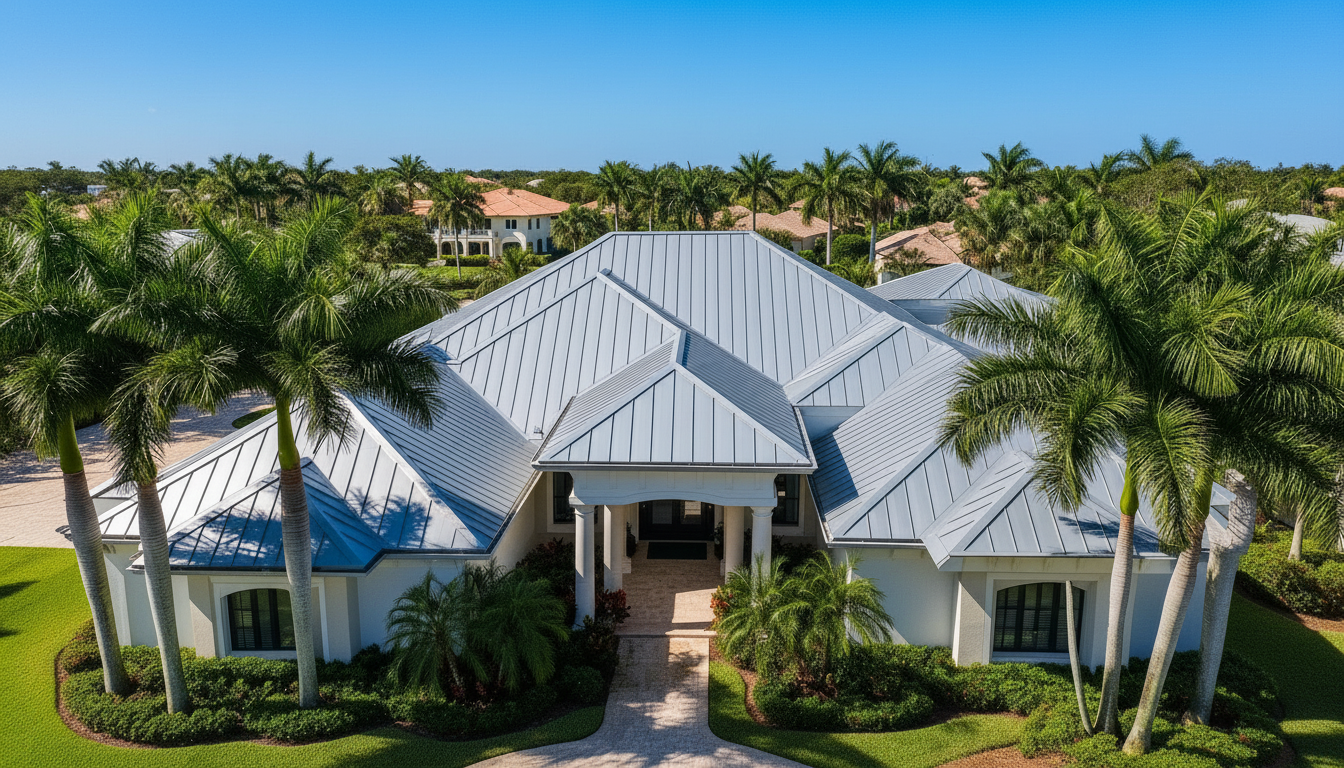
Why Florida Roofs Leak Around Flashing
Why Florida Roofs Leak Around Flashing Florida roofs leak around flashing when metal details, seals, or surrounding roof materials stop directing water saf
Overview
Why Florida Roofs Leak Around Flashing Florida roofs leak around flashing when metal details, seals, or surrounding roof materials stop directing water safely past joints and openings. Wind-driven rain exposes those weaknesses, while intense heat, persistent moisture, and coastal salt exposure can accelerate deterioration. Flashing protects places where the roof changes direction or meets something else: walls, chimneys, plumbing vents, skylights, and roof valleys. A roof can have plenty of usable shingles or tiles left and still leak at one poorly built connection. Finding the failed detail matters more than covering the nearest visible crack with sealant. How Flashing Keeps Rain Out Flashing is a water-routing system, not simply a metal patch. Its pieces must overlap in the direction water flows and connect correctly with the roof covering, underlayment, and adjoining wall materials. When those layers are reversed or disconnected, rain can travel behind them instead of draining onto the roof. At a shingle roof’s sidewall, step flashing works with successive shingle courses. Counterflashing or properly integrated wall materials protect the upper edge. At the bottom of that wall, kickout
Continued (2)
flashing directs runoff away from the siding and toward the gutter or roof edge. Missing this small diversion can allow repeated soaking behind stucco or siding. Other locations need different details. Plumbing vents typically use a flashing base and a boot fitted around the pipe. Valleys must carry concentrated runoff. Skylights need flashing suited to their design and roof covering. One generic repair approach does not fit every opening. Why Florida Weather Finds the Weak Spots Storm rain moves sideways A flashing detail may handle an afternoon shower but leak during a tropical storm. Strong gusts drive water toward side joints and beneath loose edges. Wind can also lift adjacent shingles or shift damaged components, exposing seams that normally stay covered. Heavy runoff then puts more water across the same vulnerable connection. A leak that appears only when rain comes from one direction is useful evidence. Tell the inspector which wall or ceiling gets wet and what the weather was doing. That pattern can help distinguish a wall connection problem from a vent or valley leak. Heat puts repeated stress
Continued (3)
on connections Florida roof surfaces heat up sharply in direct sun and cool during rain or after sunset. Metal, roofing, and sealants expand and contract at different rates. Repeated movement can stress fasteners, separate poorly designed joints, and crack aging sealant. Sun exposure also degrades some exposed rubber vent boots, especially as they age. Sealant has legitimate uses, but it cannot make an incorrectly overlapped assembly drain properly. A thick bead smeared across a joint may temporarily hide the opening while leaving the underlying problem unchanged. Humidity and salt complicate deterioration High humidity and frequent showers can slow drying in shaded, debris-filled areas. Leaves collecting beside a dormer or in a valley keep moisture against materials and interfere with drainage. Coastal salt exposure can speed corrosion of susceptible metals and fasteners, particularly where coatings are damaged or incompatible metals meet. Rust, pitting, and loose fasteners deserve attention, but metal selection alone does not determine performance. Installation, drainage, exposure, and compatibility with surrounding materials all matter. Common Failure Points on Florida Homes Roof-to-wall connections: Missing step flashing, poorly integrated wall flashing,
Continued (4)
or an absent kickout can send runoff behind exterior finishes. Plumbing vents: A split boot, damaged base, or failed connection around the pipe can admit water even when nearby roofing looks sound. Valleys: Debris, damaged metal, incorrect overlaps, or poorly placed fasteners can compromise a channel carrying substantial runoff. Skylights and chimneys: Corners and uphill edges are vulnerable when flashing does not drain correctly or connect with surrounding materials. Previous repairs: Exposed screws, layers of roofing cement, and reused damaged flashing can leave concealed entry points. On tile roofs, the tile surface is only part of the water-shedding assembly. Flashing must work with the underlayment beneath it. Replacing a cracked tile above a stain will not necessarily stop a leak caused by deteriorated underlayment or a failed flashing transition. Step by Step: What to Do When You Suspect a Flashing Leak Step 1: Protect the room without approaching hazards Move belongings away from dripping water and use a container if you can do so safely. Stay clear of bulging ceilings and wet electrical fixtures or outlets. Do not climb onto
Continued (5)
a wet roof, lean a ladder into storm winds, or walk on tile to search for the opening. Step 2: Record when and where water appears Photograph stains, peeling paint, and visible drips. Note whether leakage happens during every shower or only during heavy, windy rain. Record nearby roof features visible from the ground, such as a chimney or wall intersection. Keep these observations available for the inspection. Step 3: Arrange an inspection that follows the water path The ceiling stain may not sit directly below the entry point. Water can travel along decking, framing, or underlayment before dropping inside. An inspection should consider accessible interior evidence, the roof above it, and adjoining walls. Window leaks, wall cracks, and condensation can sometimes resemble a flashing leak. Step 4: Ask what failed beneath the visible surface Ask whether the problem involves damaged metal, a vent boot, incorrect overlaps, missing flashing, deteriorated underlayment, or surrounding wall materials. Some conditions cannot be confirmed until roofing is carefully removed. If testing is appropriate, controlled water testing may help isolate the source; it should not
Continued (6)
involve indiscriminately soaking the roof. Step 5: Review the repair scope and documentation A useful repair proposal identifies the affected location, materials to be removed, flashing work, and how the assembly will be restored. Ask how hidden decking damage would be handled if discovered. Photos taken during the repair can show details that will disappear beneath shingles, tile, or wall finishes. What Affects the Cost of a Flashing Repair? Replacing an accessible vent boot is a different job from rebuilding flashing behind stucco or removing tile around a chimney. The cost depends on access, roof pitch and height, roofing material, the extent of removal, and whether the surrounding assembly can be restored without broader work. Hidden damage can change the scope. Wet decking, deteriorated underlayment, damaged framing, or moisture behind a wall may require additional repairs. Tile availability and matching replacement materials can also affect labor and scheduling. Permit requirements, where applicable, should be clarified before work begins. Compare proposals by scope rather than the total alone. A surface-sealant repair and a reconstruction of the flashing connection are not equivalent.
Continued (7)
Ask what each approach addresses, what remains uncertain, and whether the condition of the surrounding roof limits the usefulness of a localized repair. Frequently Asked Questions Can flashing leak even if it looks fine from the ground? Yes. Incorrect overlaps, concealed corrosion, and failed underlayment connections may not be visible from below. A small opening beneath a covered edge can admit water without an obvious hole in the exposed metal. Will caulk stop a flashing leak? It may address a specific joint when the correct sealant is part of the intended detail. It is not a dependable substitute for missing flashing, proper overlaps, or replacement of damaged components. Does a flashing leak mean I need a new roof? Not necessarily. An isolated defect may be repairable when surrounding materials remain serviceable. Widespread deterioration or multiple failing connections can make a larger repair or replacement worth evaluating. Should flashing be checked after a major Florida storm? Yes, especially if you notice new stains, displaced roofing, loose metal, or debris lodged at roof intersections. Observe from the ground and have potentially damaged
Continued (8)
areas inspected rather than climbing up yourself. Request a Roof Inspection from O'Brien Contracting.
O'Brien Contracting — Florida roofing contractor, license CCC1335947. Call (239) 919-4485.
Related pages