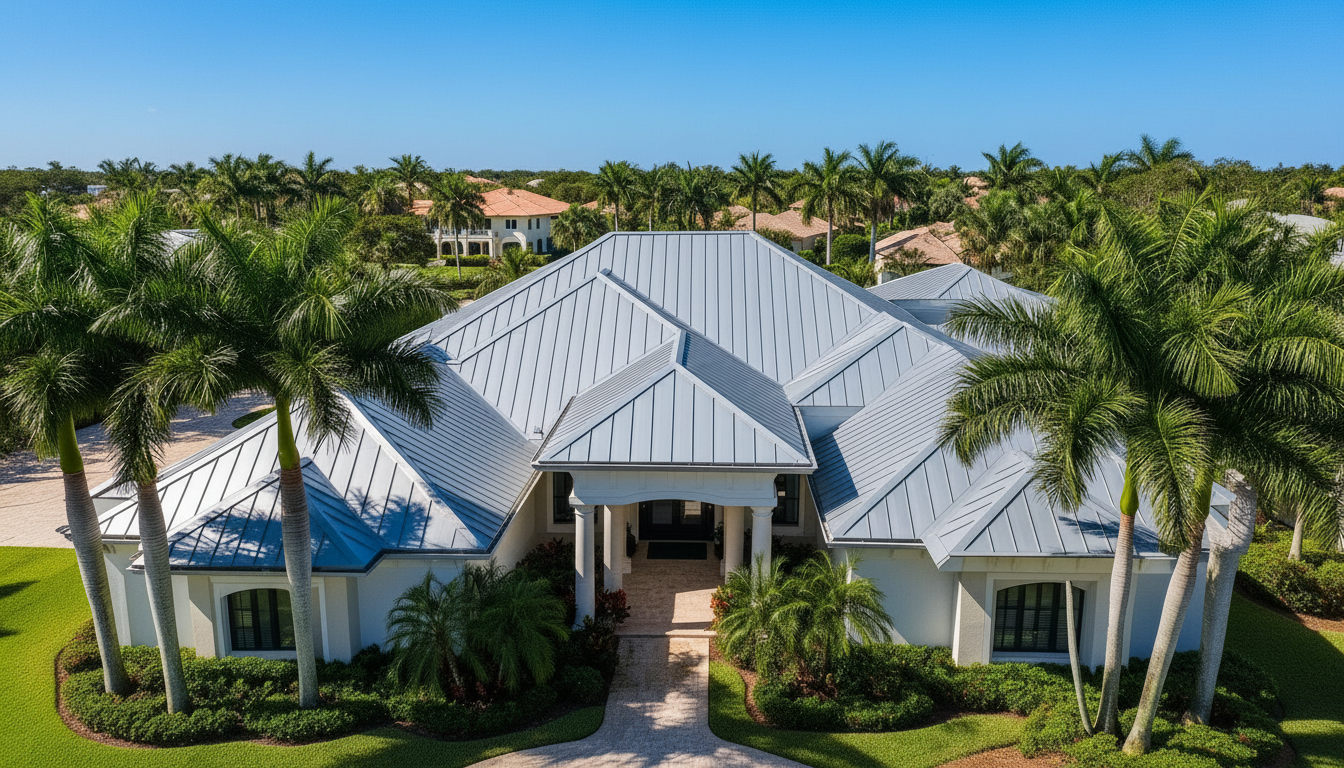
Roof replacement cost in Florida is driven by five things: the size and pitch of the roof, the material system, the condition of the deck once the old roof comes off, the code upgrades required, and the complexity of the details. Anyone quoting a price without seeing the roof is guessing.
There is no honest flat answer, and any number you see quoted online is a national average that ignores Florida. Cost here is calculated per square (100 square feet) and then adjusted for the things that actually take labor and material: how many squares, how steep the pitch, how many valleys and penetrations, what the deck looks like once the old covering is off, and which code upgrades the permit requires. A simple 20-square gable roof and a 20-square hip roof with three skylights and a chimney are not the same job even though they are the same size. We price after seeing the roof, and we put the line items in writing so you can see where the money goes.
Three code-driven line items that homeowners in other states rarely see. Deck re-nailing to current attachment requirements at tear-off. A secondary water barrier under the covering. And permitting plus inspection on essentially every replacement. Add wind-zone product approval requirements near the coast and the disposal cost of a tear-off, and a Florida re-roof carries real cost that a low bid usually gets by leaving out. If a bid is far below the others, look for the missing item rather than assuming you found a bargain.
A localized repair — a section of wind-lifted shingles, a failed pipe boot, cracked tile, a flashing detail at a wall — is a fraction of a replacement and is usually the right call on a roof with real service life left. Replacement becomes the better value when the covering is near end of life, when leaks are appearing in more than one place, or when the deck has moisture damage. We give you the repair path and the replacement path with the reasoning, not a single option.
Compare scope, not just totals. Confirm tear-off versus overlay, underlayment type, whether flashing is new or reused, who pulls the permit, whether deck replacement is an allowance or an unpriced surprise, and what the workmanship warranty actually says in writing. Two bids can be thousands apart and both be honest — the difference is what is in them.
It is priced per square and depends on roof size, pitch, material, deck condition at tear-off and required code upgrades. We quote after inspecting the roof, itemized in writing, so you can see exactly what is included.
Architectural asphalt shingle is normally the lowest installed cost. Cheapest up front is not always cheapest over time — metal typically lasts considerably longer, which changes the math on a home you plan to keep.
Usually scope. One bid reuses flashing and skips deck allowances; another includes them. Read the scope line by line.
Repair is far cheaper and is the right call when the roof has service life left and the damage is localized. Replacement wins when the covering is near end of life or leaks are showing up in multiple areas.
Only when covered damage caused the loss, and only per your policy terms. Age-related wear is generally not covered. Your carrier decides — no contractor can promise approval.
Most residential replacements are a short on-site job once materials and the permit are in hand; tile, complex roofs and deck repairs extend it. Permitting and inspection scheduling are usually the longest part of the timeline.
O'Brien Contracting — Florida roofing contractor, license CCC1335947. Call (239) 919-4485.