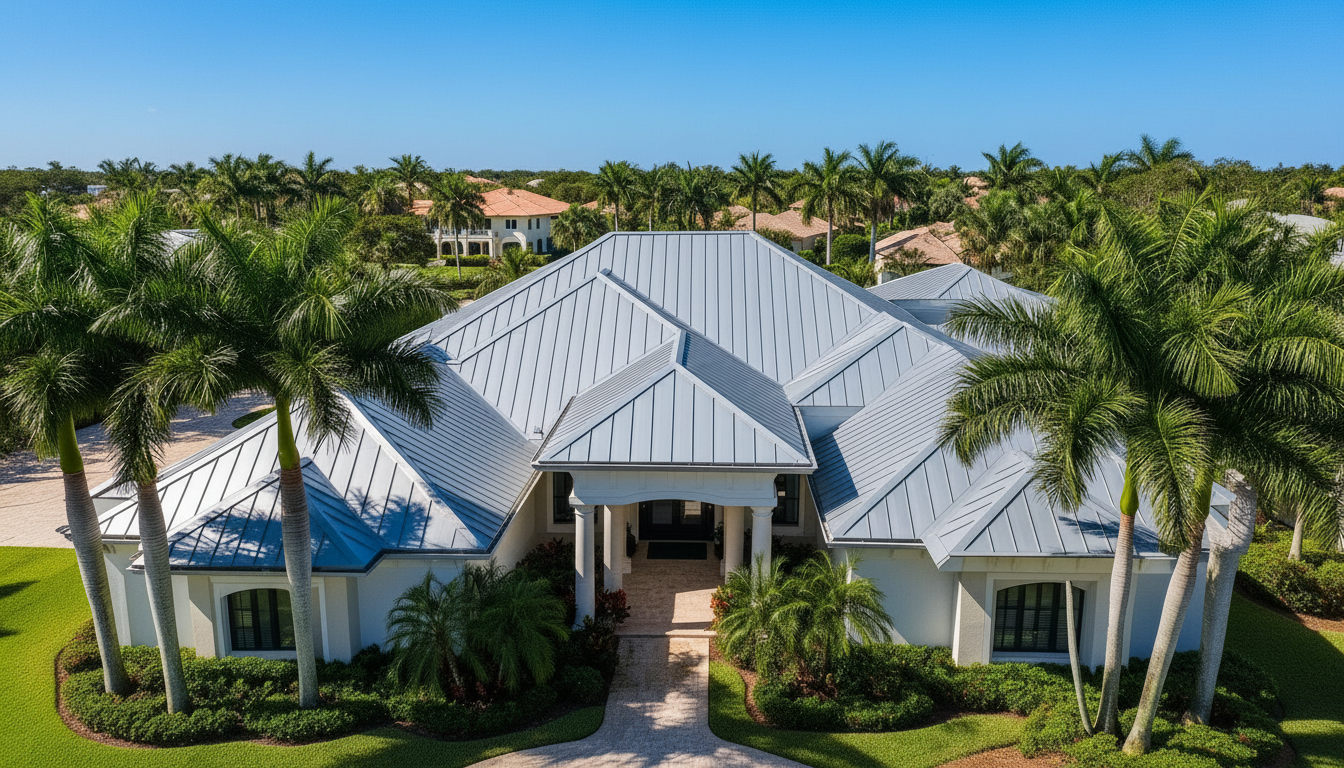
This guide explains how tile roofing actually performs in Florida conditions — heat, UV, wind-driven rain, salt air and hurricane-season wind loads — and what a homeowner should be looking at before committing to a system.
Tile itself is durable, but a Florida tile roof is only as sound as the underlayment beneath it. Most tile roof "failures" here are underlayment failures, not tile failures — the tile can often be lifted, stacked and reset over new underlayment.
Tile attachment in Florida follows FRSA/TRI installation standards referenced by the Florida Building Code, with the specific attachment method tied to the wind zone and roof height. HVHZ counties require additional approvals.
Isolated damage in an otherwise sound roof is usually a repair. Widespread deterioration, a failed underlayment or membrane, a wet deck, or damage across multiple slopes generally points to replacement. A roof inspection with photo documentation is what settles the question — not a guess from the driveway.
It depends on the structure, the wind zone at your address, HOA or deed restrictions, and your budget. Long-lived surface material that resists UV better than asphalt At the same time, heavy — the structure has to be able to carry the load, which matters on re-roofs converting from shingle. We walk homeowners through the trade-offs against the other systems before anyone signs anything.
Yes. Florida re-roofs are permitted work, and the materials must carry approval for the wind zone at the property address. Tile attachment in Florida follows FRSA/TRI installation standards referenced by the Florida Building Code, with the specific attachment method tied to the wind zone and roof height. HVHZ counties require additional approvals.
We can inspect the roof, photograph and document what we find, and organize that information for your insurer. We cannot promise a carrier will approve or pay a claim — that decision belongs to the carrier.
O'Brien Contracting — Florida roofing contractor, license CCC1335947. Call (239) 919-4485.